Update time : 2025-12-17 Publisher:Zhengzhou Hanke Machinery
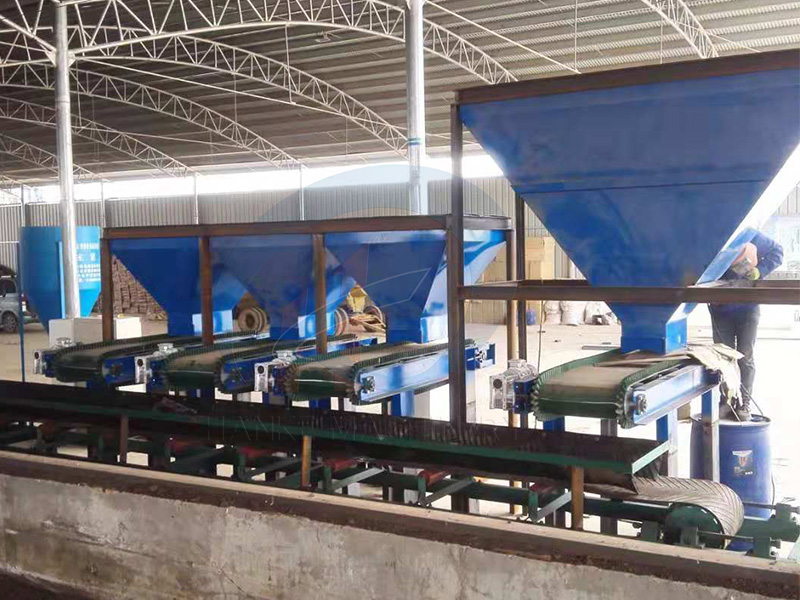
The blending fertilizer mixer is a core equipment for achieving precise proportioning and uniform mixing of multiple raw materials. When purchasing, it is necessary to focus on four core demands: proportioning accuracy, uniformity of mixing, matching of production capacity, and compatibility of materials, and make decisions based on your own production scale and raw material characteristics. The following are directly applicable procurement plans:
I. Core Procurement Suggestions for Blending Fertilizer Mixing Machines
For start-up small factories: choose semi-automatic manual batching + horizontal mixer, with low initial investment and quick return on investment.
Medium-scale production: Choose a fully automatic computerized fertilizer blending machine (6-12 bins) to balance precision and cost.
For large-scale groups with high-precision demands: Choose a large-scale dynamic continuous fertilizer blending production line to achieve unmanned production, enhance efficiency and product competitiveness.
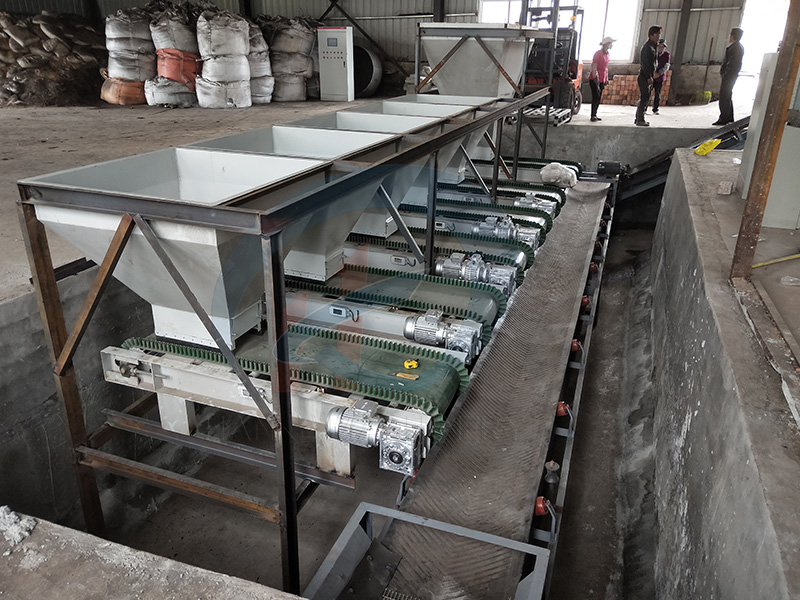
II. Key Techniques for Selecting Blending Fertilizer Mixing Machines (Core Tips to Avoid Pitfalls)
1.Select the type according to the characteristics of the raw materials.
The raw materials are mainly in granular form (non-sticky): Static batching + twin-shaft paddle mixer is selected, which offers high cost performance.
For raw materials containing powder and sticky substances (such as humic acid, amino acids), dynamic batching and a mixer with a scraper should be selected to prevent stratification and sticking to the wall.
When there is a significant difference in the specific gravity of raw materials (such as heavy calcium and trace elements), choose a model with a forced stirring and anti-stratification device.
2. Be sure to test the machine on site.
Request the manufacturer to conduct a trial run with the actual production materials to test the accuracy of the proportioning and the uniformity of the mixing (on-site sampling for testing is acceptable).
Key observations: whether the feeding is smooth, if there is any blockage, whether the materials are stratified after mixing, and if the dust emission meets the standards.
3. Take into account environmental protection and compliance.
The equipment should be equipped with a pulse dust removal system, and the dust emission should comply with the "Integrated Emission Standard of Air Pollutants".
If organic-inorganic blended fertilizers are produced, it is necessary to confirm the sealing performance of the equipment to prevent the spread of unpleasant odors.
4. Reserve expansion space
Even if the initial production capacity demand is small, it is still recommended to choose a model with an expandable raw material warehouse (such as expanding from 6 to 12 warehouses), to avoid the need to replace the equipment when the production capacity increases later.
As a professional manufacturer with years of experience in packaging machine equipment production, Hanko Machinery provides one-stop services for packaging machines and their accessories to each user, covering equipment selection, scheme configuration, on-site installation, commissioning and operation, as well as after-sales service. We will be fully responsible for all aspects to truly save users' investment.
see details +
see details +
see details +
see details +

 Tel:+86 17319777703
 E-mail:hkautomaticpack@foxmail.com
 Address:Xingyang City, Zhengzhou City, Henan Province.


Privacy Policy Copyright © Zhengzhou Hanke Machinery Equipment Co., Ltd Co., Ltd.





 Mobile/Whatsapp
 E-Mail
