Update time : 2026-01-12 Publisher:Zhengzhou Hanke Machinery
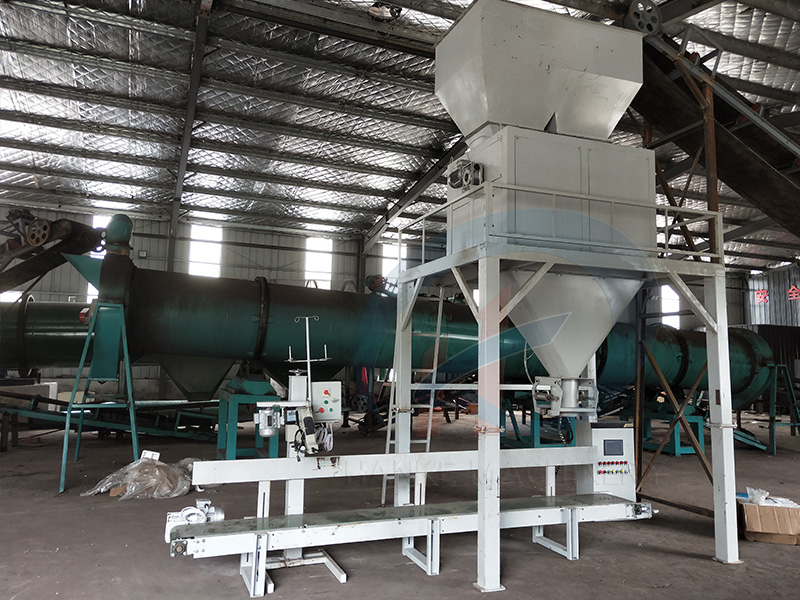
The activated carbon granule packaging machine is a commonly used packaging machine in the industrial, agricultural and food industries, and is widely applied in the market. Its installation is also highly concerned. The following is a detailed introduction to the installation of the activated carbon granule packaging machine:
I. Step-by-step Installation Process (General Standalone, Production Lines Can Be Expanded According to This)
Step 1: Equipment Positioning and Leveling
Use forklifts / cranes to lift and transport the main unit, silo, dust removal system, sealing machine, inkjet printer and other components to the designated positions. It is strictly prohibited to collide with the weighing sensor.
Calibrate the mainframe rack with a level, adjust the anchor bolts, and ensure that the machine body is level (the error in front and back / left and right is ≤ 0.5mm/m).
Fixed anchor bolts (if it is a concrete foundation, embedded anchor bolts or expansion bolts should be used, and the torque should meet the manufacturer's requirements) to prevent the equipment from shifting during operation.
Step 2: Connect the silo to the feeding system (core sealing section)
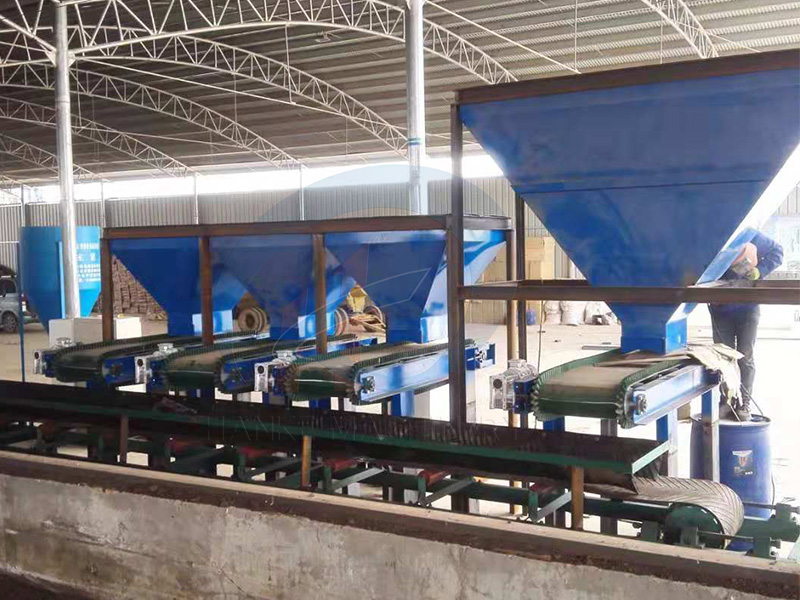
Install the hopper and ensure that the discharge port of the hopper is aligned with the feeding port of the feeding system (screw / double bucket). Seal the connection with a food-grade gasket and stainless steel clamp. Leaking of powder is strictly prohibited.
Install the vibration motor (if any), adjust the vibration frequency to ensure that the material does not bridge and falls smoothly.
Connect the dust removal system: Link the dust removal pipes to the top of the silo and the filling port to ensure smooth negative pressure. Install the filter elements in place (for pulse dust removal, connect to compressed air).
Step 3: Installation of Anti-static and Explosion-proof System (Exclusive for Activated Carbon)
Overall machine grounding: Connect all metal components such as the main unit, material hopper, feeding system, dust removal system, and sealing machine with a copper core wire of ≥ 6mm² to the grounding electrode. The grounding resistance should be less than 1Ω (test with a grounding resistance tester).
Inert gas protection (for explosion-proof models): Connect the CO₂/nitrogen gas pipeline to the filling chamber, adjust the oxygen content to be less than 3%, and set up an automatic gas replenishment device.
Anti-static component inspection: Confirm that the components in contact with the material (screw blades, hoppers, filling nozzles) are made of conductive materials, without insulating coatings, and are reliably connected.
Step 4: Connection of Electrical and Pneumatic Systems
Electrical connection: Connect the power supply, control circuit, and sensor circuit according to the electrical schematic diagram. Do not connect the wires incorrectly. Install the emergency stop button and test its effectiveness.
Pneumatic connection: Connect the air source pipeline, install the oil-water separator, pressure reducing valve and pressure gauge, adjust the air pressure to 0.6 - 0.8 MPa, and check that there is no air leakage in the pneumatic components.
Inkjet printer connection: Install the inkjet printer, debug the production date, batch number, count and other parameters, and ensure that the inkjet printing is clear.
Step 5: Installation of the packaging and sealing system
For large-sized bags (25 - 50kg): Install the sewing machine / heat sealer, adjust the tension of the sewing thread, heat sealing temperature and pressure to ensure the seal is firm and there is no leakage.
For small specifications (2 - 200g): Install the ultrasonic cold sealing machine, adjust the ultrasonic power and sealing time to ensure that the non-woven fabric / filter paper bags are sealed smoothly and without damage.
Step 6: No-load Debugging and Weighing Calibration (Core Precision Stage)
No-load commissioning: Power on, supply air, start the equipment, and test the operating status of each component (screw/double-bucket feeding, dust removal, sealing, inkjet coding), and check for any abnormal sounds, jams, air leaks, or powder leakage.
Weight calibration:
Peeling calibration: Empty the hopper and perform peeling according to the controller operation manual.
Calibration of weights: Use standard weights (50kg, repeated tests three times) to calibrate the load cell, adjust the coarse feed / fine feed ratio, and ensure that the measurement accuracy reaches ±0.3% to ±0.5% (conventional) / ±0.1% to ±0.2% (high precision).
Dynamic calibration: Simulate actual production, continuously package 10 bags, weigh each bag, record the error, and adjust the dynamic compensation parameters.
Step 7: Load Testing and Acceptance (Final Verification)
Load test: Add the same batch of activated carbon particles, continuously package 30 to 50 bags, and test the packaging speed, measurement accuracy, dust control, sealing quality, and clarity of the inkjet printing.
Environmental protection inspection: The dust emission concentration is tested to be ≤ 10mg/m³, meeting the environmental protection requirements.
Acceptance: The manufacturer and the user sign to confirm together, complete the training (operation, maintenance, fault handling), and transfer the equipment manual, certificate of conformity, and test report.
II. Safety Warnings and Compliance Requirements
It is strictly prohibited to perform live or pressurized operations during installation.
Explosion-proof tools must be used in explosion-proof areas. Smoking and open flames are strictly prohibited.
When the equipment is in operation, it is strictly prohibited to insert hands into the material bin, feeding system, or filling port.
Regularly inspect the grounding resistance, dust removal system and explosion-proof system to ensure they meet the standards.
III.Where can I buy activated carbon granule packaging machines?
There are many manufacturers selling activated carbon granule packaging machines on the market, but not every manufacturer's equipment can meet the environmental assessment standards. If you want to purchase a truly environmentally friendly activated carbon granule packaging machine, you can visit Zhengzhou Hankemechanical Factory for more information.
Zhengzhou Hanko has many years of experience in the research and development, production and sales of activated carbon particle packaging machines. The activated carbon particle packaging machines designed by it have superior performance, high output and are more environmentally friendly. Coupled with strict production management and raw material quality control, the quality of its equipment is more reliable.
Meanwhile, professional engineers and sales teams will customize the best production plans for each customer and provide reasonable production solutions. In terms of environmental protection, the dust removal facilities in all production environments are all at a relatively high level. Due to the good quality of the equipment, the noise during the equipment production process is very low, which can meet the standards of environmental protection requirements.
see details +
see details +
see details +
see details +

 Tel:+86 17319777703
 E-mail:hkautomaticpack@foxmail.com
 Address:Xingyang City, Zhengzhou City, Henan Province.


Privacy Policy Copyright © Zhengzhou Hanke Machinery Equipment Co., Ltd Co., Ltd.





 Mobile/Whatsapp
 E-Mail
